Seed Starting with Trays and Humidity Domes: The Outdoor Method Denver Gardeners Need
If you've ever tried starting seeds indoors, you know the drill: little trays crowding your windowsills, grow lights you have to remember to turn on, and the whole hauling-seedlings-in-and-out routine once it starts warming up. It's a lot.
Here's the thing: for some seeds, you don't actually have to do any of that.
Cucumbers, squash, and pumpkins are warm-season crops that germinate fast and grow even faster. If you time it right (more on that in a second), you can start them outside in trays with humidity domes and completely skip the indoor germination phase. No hardening off. No forgotten grow lights. Just seeds in trays, a dome on top, and a few days of patience.
This is exactly what I've been doing in my garden (and for my client gardens) and I'm going to walk you through how it works.
In this post, we're covering:
Why cucumbers, squash, and pumpkins are perfect candidates for outdoor starting
How to prep your trays so they're actually ready to go
The right way to plant and cover seeds in cell trays
How humidity domes do the work for you — without a greenhouse
Denver timing: when to start so you're not babying plants through cold nights
Watch the Youtube Video!
Why These Seeds Don't Need to Be Started Indoors
Not every seed needs the indoor treatment. Cucumbers, squash, and pumpkins are what I call "fast movers". They germinate quickly (sometimes in just 2–4 days) and they grow so fast that starting them too early actually works against you.
If you start cucumbers inside 6 weeks before your last frost, you'll have a leggy, root-bound transplant that stresses out when you move it outside. These crops do better when they go into the ground, or into trays outdoors, closer to planting time.
Here in Denver, our average last frost is around May 7, though it varies year to year. I usually wait until I'm within about a week of that date before I start these outside. By then, nighttime temps are consistently warm enough that I'm not worried about cold stress.
The beauty of this approach: plant the seeds, put on a humidity dome, and these fast germinators do their thing… no indoor setup required.
How to Prep Your Trays (The Rain Method)
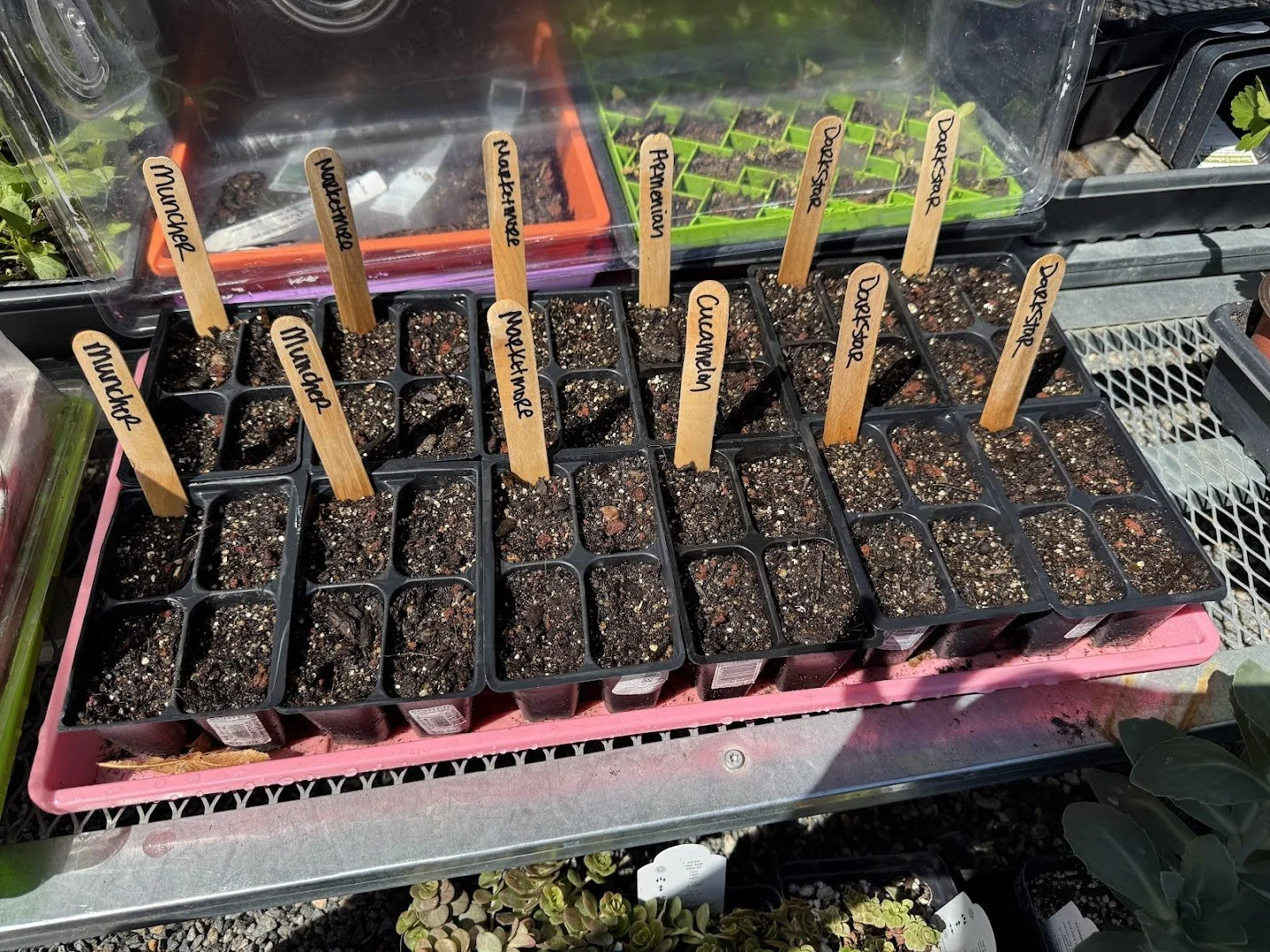
One of my favorite low-effort tricks for getting seed starting trays ready: let the rain do it for you.
Before I'm ready to plant, I fill my trays with dry soil and just leave them outside. When it rains, the water soaks in evenly and does a much better job of moistening the soil all the way through than watering from the top does.
If you don't have rain in the forecast (very possible here in Denver), you can water your trays a day or two in advance and let them drain before planting. The goal is moist soil throughout — not wet, muddy clumps.
Why this matters: Seeds need consistent moisture to germinate. Dry soil = spotty germination. Pre-moistening your trays before you plant sets your seeds up for success from the start.
Planting Seeds in Cell Trays
Cell trays come in different sizes and I use both larger and smaller cells depending on what I'm planting. For cucumbers, squash, and pumpkins, I use cell trays where each cell gives the seedling enough room to develop before transplanting.
Here's my planting process:
1. Two seeds per cell (sometimes three) I plant two seeds per cell as a general rule. If both germinate, I'll thin to the strongest one. If a seed doesn't make it, I've still got a backup in that cell. For bigger seeds that tend to slip out of my fingers (like squash), I sometimes drop three in just to be safe.
2. Press them into the soil After placing the seeds, I press them down gently into the soil. This ensures good seed-to-soil contact, which is one of the most important factors for germination.
3. Cover with a little more soil Add just a thin layer of soil over the top. You're not burying them deep, just covering. For most cucumbers, squash, and pumpkins, about ¼ to ½ inch of soil on top is plenty.
4. Water gently A light watering after planting helps settle everything in. Use a gentle stream or a watering can with a rose head so you don't disturb the seeds.
Labeling tip: If one label covers an entire tray, that means all four cells have the same variety. If I'm mixing varieties within a tray, each cell or section gets its own label. Keep it simple and future you will thank you.
Read Next: Raised Beds: Why they Work for Denver
How Humidity Domes Replace the Indoor Setup
This is where the magic happens.
A humidity dome is exactly what it sounds like: a clear plastic dome that sits over your seed tray and traps warmth and moisture inside. Inside that little dome, you create the same humid environment seeds need to germinate, without any of the indoor infrastructure.
Here's what the dome does for you:
Traps moisture so seeds don't dry out between waterings
Holds warmth, which is especially helpful in the morning when temps can still dip here in Denver
Speeds germination because the consistent humidity and warmth can cut germination time down significantly
Protects from wind since Denver spring wind is no joke, and even gentle gusts can dry out a seed tray fast
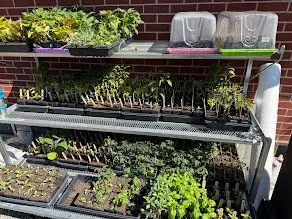
Once you've planted and watered, set the dome over the tray and leave it. Check daily, but you likely won't need to water again until you see sprouts.
When to remove the dome: Once seedlings have sprouted and are pushing up toward the dome, it's time to take it off and let them start adjusting to outside air.
Denver Timing: When to Plant Cucumbers, Squash, and Pumpkins
Timing is everything with warm-season crops in Denver. Plant too early and you're battling cold nights, stressed plants, and slow growth. Plant at the right time and these crops take off fast.
My rule for cucumbers, squash, and pumpkins: wait until you're within one to two weeks of your last frost date before starting seeds in outdoor trays.
Why? Because:
These crops don't love cold soil or cold nights
They germinate so fast (2–4 days in good conditions) that you don't need the head start
A seedling started at the right time will catch up to, and often outperform, one started too early in stress conditions
For Denver, that usually means late April to early May. Once I know we're within a week or so of the last frost and nighttime temps aren't dropping too low, I feel good starting these outside.
If you're a few weeks out and itching to do something, channel that energy into prepping your garden beds, amending your soil, or getting your warm-season transplants (tomatoes, peppers) sorted. Cucumbers and squash will be there when it's time.
What About Direct Sowing?
You can absolutely direct sow cucumbers, squash, and pumpkins straight into your garden bed, and many gardeners do. So why use trays at all?
A few reasons I like the tray method:
Better germination rate because seeds in trays are easier to monitor and keep consistently moist
Protection from critters since squirrels and birds can't easily raid a tray under a dome
Flexibility in case a late frost sneaks up on you (it happens in Denver) — you can move or cover trays more easily than a whole bed
Visibility because it's satisfying to watch them sprout before they go into the ground
That said, if you have raised beds that warm up quickly and you're planting right at or after your last frost, direct sowing works great too. Do what makes sense for your setup.
Quick Recap: Outdoor Seed Starting with Trays and Humidity Domes
Here's the whole process from start to finish:
Fill trays with soil and pre-moisten (rain, or water a day or two ahead)
Plant 2 seeds per cell, pressing gently into soil
Cover with a thin layer of soil (¼–½ inch)
Water gently to settle seeds
Label your trays (one label per variety)
Put on the humidity dome and place trays outside in a spot with good light
Check daily and watch for germination (could be as fast as 2–4 days!)
Remove the dome once seedlings emerge and start reaching up
Transplant when seedlings have a true leaf or two and it's past your last frost
That's it. No grow lights. No hauling trays in and out. Just seeds doing what seeds do, with a little help from a dome.
You Don't Have to Overthink This
Gardening is full of methods, debates, and "the right way to do it." Seed starting is no exception.
But here's what I know: cucumbers, squash, and pumpkins want to grow. Give them moist soil, consistent warmth, and the right timing, and they will. The humidity dome just helps you give them that environment without a lot of extra equipment or effort.
Start simple. Watch what happens. Adjust from there.
Save this Blog on Pinterest! Great one to bookmark for next spring planting season.
Give Your Garden the Best Start This Year!
Whether you’re starting from scratch or you’re a garden pro, let us support you in your garden this season. We’ve got something for everyone!
🌱 Want to learn exactly what to grow (and when) in Denver?
Check out our Denver Growing Guide for in-depth advice, planting tips, and planning strategies! Let’s start planning your best garden yet.
🌱 Need help designing a garden that works for YOU?
We offer consultations, custom garden and landscape designs, and maintenance packages. Sign up for a consultation today and let’s create a space that nurtures both your plants and your well-being.
Have questions or want to share your gardening success stories?
Drop a comment below, or reach out through our Contact Page!
Check out our free resources or services!

Save this Blog on Pinterest!


**This post may contain affiliate links, which means I earn a small profit if you click on the link to make a purchase. Other links are not sponsored, because I also like supporting small, local businesses.**

Meet the Gardener
I’m Elisa Mack - a mom and Denverite who went from being a green-ish thumb to a kitchen garden fanatic simply by dedicating myself to the study of all things Colorado gardening.
Landscapers don’t design. And nurseries don’t make house calls.
We take a more full-service approach, from designing your dream garden to keeping it beautiful year-round.
And as your coach, I’ll help eliminate the guesswork through every season, no matter your level of knowledge.